
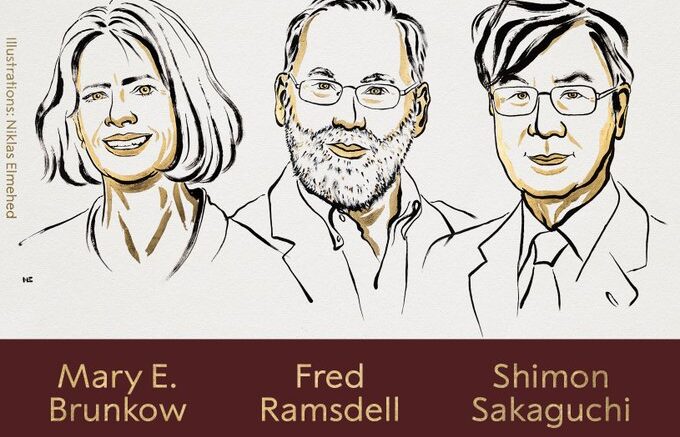
2025 Nobel Prize in Physiology or Medicine
The 2025 Nobel Prize in Physiology or Medicine has been awarded to Mary E. Brunkow, Fred Ramsdell, and Shimon Sakaguchi for their groundbreaking discovery in peripheral immune tolerance, the process through which the immune system prevents itself from attacking the body’s own tissues. Their work is changing how scientists understand autoimmune diseases and is leading to new immunotherapy treatments.
The Immune System’s Security Guards
In 1995, Shimon Sakaguchi of Osaka University identified a subset of immune cells, later called regulatory T cells (Tregs). These cells suppress overactive immune responses and are essential for maintaining immune self-tolerance. Sakaguchi demonstrated that Tregs express the protein CD25 and play a vital role in preventing the immune system from attacking the body’s own tissues. Their discovery highlighted a previously unknown mechanism the body uses to protect itself from autoimmune disorders.
In the early 2000s, Mary Brunkow and Fred Ramsdell, then at Celltech R&D in Bothell, Washington, found that mutations in the FOXP3 gene on the X chromosome caused a fatal autoimmune disorder in mice known as scurfy. They later discovered that similar mutations in humans lead to IPEX syndrome, a severe autoimmune disease. Their research confirmed that FOXP3 is essential for the development and proper function of Tregs. These findings established a direct link between the FOXP3 gene, Tregs, and the prevention of autoimmune conditions.
Together, the work of Sakaguchi, Brunkow, and Ramsdell revealed the essential mechanisms of peripheral immune tolerance, demonstrating how the immune system prevents attacks on the body’s own tissues. Their discoveries have changed our understanding of autoimmune diseases, including rheumatoid arthritis, type 1 diabetes, and multiple sclerosis, by showing how Tregs suppress harmful overactive immune responses.
Clinical Implications/Ongoing Research
These discoveries open the door for a new field of research known as peripheral immune tolerance and have spurred the development of new treatments for cancer and autoimmune diseases. Currently, more than 200 clinical trials are underway exploring the therapeutic potential of Tregs, particularly in areas including stem cell transplantation and cancer immunotherapy.
Nobel Surprise in the Wilderness
Fred Ramsdell, a scientific advisor at Sonoma Biotherapeutics in San Francisco and one of the Nobel recipients, was unaware of his win for over 12 hours after its announcement due to being off the grid hiking in the Rocky Mountains. He only learned of the honor when his wife turned on her phone at a Montana campground and screamed in surprise, a sound he initially feared was caused by a bear encounter, the New York Post reports.
The Nobel Prize, which includes 11 million Swedish crowns and a gold medal, will be officially presented on the anniversary of Alfred Nobel’s death, December 10th, in Stockholm, Sweden.




Be the first to comment on "Autoimmunity Research Wins Nobel"