
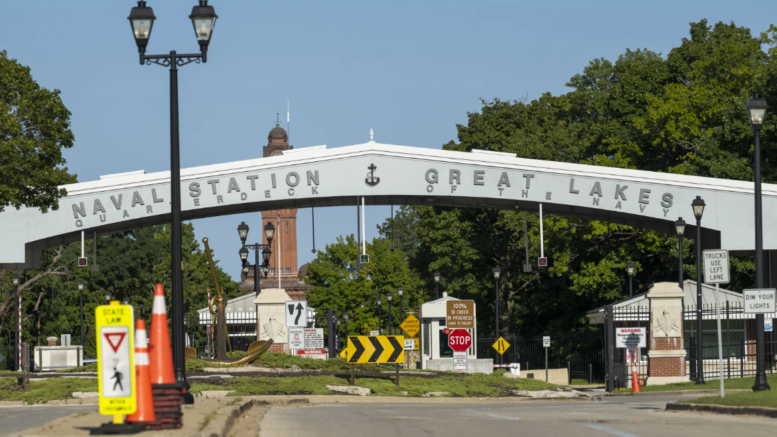
The Trump administration is actively considering utilizing Naval Station Great Lakes, a major military training facility located 35 miles north of Chicago, as a support base for federal immigration enforcement operations. The move, confirmed by base officials, has ignited a fierce political confrontation with Illinois’s top Democratic leaders, who are preparing for a significant legal and political fight against what they decry as an unconstitutional overreach.
The request from the Department of Homeland Security (DHS) seeks “limited support in the form of facilities, infrastructure, and other logistical needs” from the base. While the inquiry stops short of an immediate plan to deploy National Guard troops, it signals the administration’s intent to expand its immigration enforcement tactics into the nation’s interior, specifically targeting Chicago, a longtime sanctuary city.
Illinois Governor J.B. Pritzker responded with immediate and forceful opposition, framing the potential deployment as a direct assault on local sovereignty. “Unlike Donald Trump, we keep our promises,” Pritzker declared. “We will not stand idly by if he decides to send the National Guard to intimidate Chicagoans. Action will be met with a response.” He later condemned the proposal in stark terms, accusing the President of attempting to “occupy a U.S. city, punish its dissidents and score political points” and labeling the idea “un-American.”
Chicago Mayor Brandon Johnson stood alongside the governor, vehemently rejecting the administration’s justification that the city is in a state of lawless crisis. He pointed to new data showing double-digit percentage drops in homicides, robberies, and shootings over the past year. “The problem with the President’s approach is that it is uncoordinated, uncalled for, and unsound,” Johnson stated. “Unlawfully deploying the National Guard to Chicago has the potential to inflame tensions between residents and law enforcement when we know that trust between police and residents is foundational to building safer communities.”
Behind the public rhetoric, state and city officials are coordinating a multi-pronged resistance. Illinois Attorney General Kwame Raoul is developing legal strategies to challenge any deployment, while community and immigrant advocacy groups are rushing to train lawyers in deportation defense. Chicago Police Superintendent Larry Snelling made clear his department would not assist federal immigration agents, stating that such cooperation “does nothing to help relationships between police and residents, and in fact it hurts.”
President Donald Trump’s recent remarks from the Oval Office praising a group of Black women who support him in Chicago have reignited debate over his push to send federal troops into the city. Trump pointed to what he called a “force of Black women” wearing red MAGA hats who wanted him to intervene in Chicago, using their visibility to argue for the deployment of the National Guard. Public comments, made just days after he suggested Chicago could be the next city to see federal military intervention, drew swift backlash from Illinois Democrats, who questioned both the legality of such a move and the president’s claims of representing Black Chicagoans.
The women Trump referenced are part of a collection of small but vocal pro-Trump groups, including ChicagoRED and Chicago Flips Red, who have become fixtures at City Council meetings. Often wearing red shirts and hats, they direct fiery criticism at Mayor Brandon Johnson and the city’s Democratic leadership, accusing them of betraying the Black community. Their confrontational presence has sometimes led to their removal from chambers, but their livestreams, merchandise sales, and social media presence have amplified their voices beyond City Hall. Leaders like Patricia Easley and Zoe Leigh have parlayed their activism into political bids and heightened profiles, pointing to direct acknowledgments from Trump as proof of their influence.
The Trump administration’s consideration of utilizing Naval Station Great Lakes is seen by critics as an escalation of the President’s long-standing political feud with Democratic-led cities and a direct challenge to Chicago’s sanctuary policies. With both sides digging in, the prospect of federal forces operating from a military base outside Chicago sets the stage for a major constitutional clash, with local leaders promising to use every tool at their disposal to block it.



Be the first to comment on "Illinois Leaders Vow Fight Against Trump’s Chicago Troop Plan"