
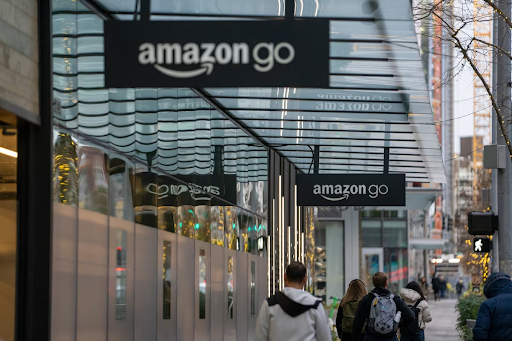
On January 28, Amazon laid off over 16,000 employees, following the 14,000 announced last October. These 30,000 layoffs reflect a broader corporate trend: reducing management after the digital boom of the pandemic and introducing AI into entry-level positions. Although CEO Andy Jassy cites improving company efficiency as the reason for the cuts, corporate signals surrounding artificial intelligence use and cost reduction suggest other priorities.
In a June 2025 statement, Jassy likened AI systems to autonomous agents, stating, “There will be billions of these agents, across every company and in every imaginable field…Many of these agents have yet to be built, but make no mistake, they’re coming, and coming fast.” While Amazon has maintained that the recent layoffs were not caused by AI automation, the company seems to be positioning itself to integrate artificial intelligence into its operations.
Amazon Head of HR Beth Galetti has stated that this is not the start of a recurring cycle where Amazon announces new layoffs every few months. However, she also noted that the company will continue evaluating employee “ownership, speed, and capacity to invent,” making adjustments as needed.
While AI has influenced Amazon’s restructuring, these layoffs also reflect economic pressures and workforce overexpansion from the pandemic. During the COVID-19 pandemic, companies like Amazon rapidly expanded their workforces to meet surging demand for digital services. With society returning to pre-pandemic activity levels, many corporations now find themselves overstaffed. Reduced demand and pressure from investors to improve profit margins doubly incentivize companies to reduce labor costs. Layoffs serve both as a cost-cutting measure and as a signal to shareholders that they are prioritizing fiscal efficiency.
Major corporations in varied industries, including UPS, HP, Nestlé, and Microsoft, have each laid off more than 4,000 employees in the past six months alone. Total layoffs have risen sharply from 761,358 in 2024 to 1,206,374 in 2025, increasing by 58 percent. This year seems to continue the trend, with more than 61,650 workers having already been affected as of late January.
The consequences of these job cuts have impacts beyond displaced employees. Layoffs add pressure to an already strained U.S. economy experiencing the effects of tariffs and the weakening of the dollar. Often described as the trickle-down effect, reduced income among typically high-earning tech workers leads to decreased spending at local businesses such as restaurants and childcare providers. Furthermore, the influx of skilled labor into the job market is likely to hinder wage growth, even for those currently employed.
Amazon’s decision to lay off approximately 30,000 of its employees reveals its intent to rebrand itself as a current, AI-optimized company. While Amazon frames its recent layoffs as efficiency-driven, their scale and timing suggest a more deliberate adjustment of priorities in response to economic pressure and the rise of artificial intelligence.





Be the first to comment on "Amazon’s Mass Layoffs Signal a Strategic Shift"