

Hurricane Melissa originated from thunderstorms near West Africa before being designated as a Tropical Storm on Oct. 21. Fueled by warm Atlantic waters one to two degrees above average, the storm underwent rapid intensification and became a Category 4 on Oct. 26. On Oct. 28, Melissa made landfall in southwestern Jamaica as a Category 5 at the border of Westmoreland and St. Elizabeth parishes. Afterwards, it made landfall in eastern Cuba as a Category 3. It finally passed through the Bahamas and Bermuda as a Category 1 before entering the Northern Atlantic Ocean and dissipating near Newfoundland, Canada.
Melissa broke or came close to many Atlantic hurricane records. It was the strongest hurricane ever recorded to make landfall in Jamaica, with Gilbert in 1988 previously having struck as a Category 3. The last Category 5 to make landfall in the Atlantic basin was in 2019, when Hurricane Dorian struck the Bahamas.
Additionally, Melissa is tied with the 1935 Labor Day hurricane for the third-most intense hurricane by pressure, at 892 millibars(mb). The only hurricanes with a higher pressure were Wilma in 2005 at 882 mb and Dorian in 2019 at 888 mb.
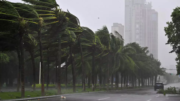
Melissa created devastating consequences, including deaths, flooding, and costly infrastructure damage. In St. Elizabeth, near where Melissa made landfall, the city’s only public hospital lost power. Roofs were gone, power lines were toppled over the ground, and almost all streets were flooded. In Black River, many roads were blocked by the damage, which forced aid to arrive via air. 462,000 people were without power as of Oct. 31, which has caused a lack of clean water and a need for safe food storage.
As of Nov. 3, there were at least 19 confirmed deaths in Jamaica, but likely many more, as well as 34 in Haiti and 2 in the Dominican Republic. At least 23 were killed when a river overflowed in Petit-Goave, Haiti. In Cuba, no fatalities were reported among the around 735,000 who were evacuated. According to CBS, officials noted that the intense rain actually helped end a drought. AccuWeather estimates the total damage in the Caribbean at $48-52 billion.
Agriculture has also been significantly impacted, with many farmers reporting losses of key crops such as banana, cassava, and coffee. Jamaica is one of the largest exporters of coffee in the world, generating about $25 million per year.
The United States has sent significant aid to help the impacted countries recover. In a press release, the United States says it has provided $24 million for Jamaica, Haiti, the Bahamas, and Cuba. They aim to provide food, water, shelter, and medical aid. In addition, the government has provided multiple websites for people to make donations. Jamaica is rushing to rebuild ahead of peak tourism season in the winter.
Tourism is a major source of income, employing around 175,000 people. 4.3 million visitors were expected, which is a growth of 7% from the previous year. Income from tourists is needed the most at this time; as a result, officials are rushing to repair lodging and clean up popular attractions. According to NPR, Edmund Bartlett, Jamaica’s tourism minister, has set a goal for a full reopening of tourist destinations by December 15th, 2025. He notes that the government is rebuilding its infrastructure with preparation for future severe weather conditions. Building codes are being revised, and power lines are being moved underground. Bartlett notes that the best way for people to show support is to visit.
Sources
https://www.wlox.com/2025/10/28/melissa-makes-landfall-jamaica-one-strongest-record-atlantic-basin/


Be the first to comment on "Record-breaking Hurricane Melissa causes widespread consequences across the Caribbean"