
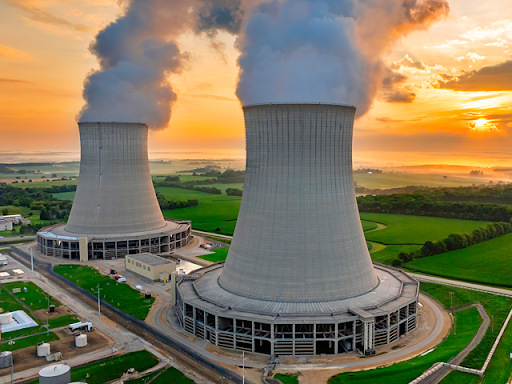
A recent study from Harvard T.H. Chan School of Public Health found that cancer risk in Massachusetts is significantly increased by proximity to a nuclear power plant. Published December 18 in BMC Environmental Health, the study investigated associations between ZIP-code proximity and cancer incidence among Massachusetts residents.
Despite policies pledging considerable increases in nuclear power in the United States, relatively little literature examines its long-term safety in residential areas. Past catastrophes at nuclear energy facilities, such as Chernobyl (Ukraine) and Fukushima Daiichi (Japan), have strongly influenced public opinion on nuclear safety.
After controlling for typical weather, race, age, and income, the researchers found that roughly 3.3% of the cases included in the study were associated with living near a nuclear power plant, totaling around 20,600 cases. The risk of developing cancer in proximity to a nuclear facility increased with age. The researchers also found that risk declined sharply beyond 30 km from nuclear power plants, suggesting that placement of the plants could significantly decrease cancer incidence. The researchers do not claim that nuclear power plants cause cancer, but call for further investigation of the potential health effects of nuclear facilities.
Though the study adjusts for some confounding variables, it uses a ZIP code-level ecological model rather than individual-level exposure data. ZIP code analysis links cancer incidence to nuclear power plant proximity at a community level, focusing on geographical data rather than personal history or occupational exposure. The study cannot determine whether the individuals who developed cancer were directly or long-term exposed to radiation from nearby facilities. Distance from a plant was used as a proxy for exposure, but the researchers considered no direct radiation measurements or personal exposure records. The U.S. Nuclear Regulatory Commission maintains that radiation levels released by normal plant operations are far below levels considered harmful to public health.
The study’s findings arrive during a time of renewed interest in nuclear energy. In the context of global energy, nuclear energy is a fairly minor player, providing just 9% of the world’s electricity. Despite its smaller relative contribution, nuclear energy remains central to climate policy discussions. In 2024, the U.S. Department of Energy announced a national goal to expand nuclear capacity by 35 GW by 2035 as part of broader decarbonization efforts.
Nuclear energy is promoted as a reliable, carbon-free alternative to fossil fuels, which are well-documented contributors to cancer rates through air pollution. If proximity to nuclear facilities causes measurable health risks, even if at low levels, it could complicate expansion efforts. However, because the study demonstrates correlation rather than confirming causation, it will likely prompt more rigorous individual-level and radiation-dose-based research rather than immediate policy change.
Whether the observed association reflects environmental radiation exposure, unmeasured confounding variables, or another unconsidered relationship remains unresolved. For policymakers weighing climate goals against public health concerns, the study raises questions—but does not provide definitive answers.




Be the first to comment on "Nuclear Power and Public Health: New Study Sparks Debate Over Cancer Risks"