Browse By

Predicting chemistry

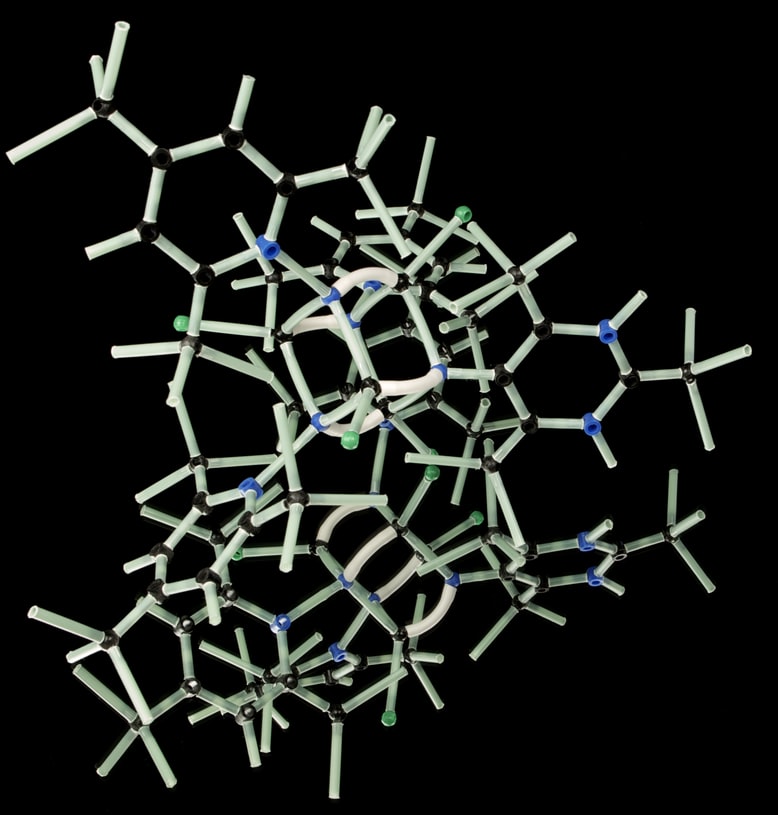
Written by Ju-Won Park  Quantum chemistry is the study of the properties of molecules and reactions. Recently,  computer technologies have started to be used to understand, model, and predict molecular properties and reactions. This consists of the properties of nanometer materials (substances with dimensions smaller

A Cell Without a Cell?

Written By Ashley Koca The biological sciences are advancing beyond what has been defined by nature: from cellular functions now reproduced outside the cell to the use of “BioBricks” to construct DIY lifeforms, synthetic biology is the future of the life sciences.  Synthetic biology is

No Thumbnail

Mathematical Epidemiology: Past Findings and Future Possibilities

By: Madhav Parthasarathy Have you ever wondered how and why diseases spread? Well, the answer to that is Mathematical Epidemiology! Mathematical Epidemiology is the mathematical modeling of diseases to determine the rate at which people become infected with diseases. The study of infectious disease data

No Thumbnail

The ‘Quantum Zeno Effect’ Explained

Written by alexander zhang Greek philosopher Zeno of Elea once had an interesting thought (as philosophers do): if an arrow in flight is examined at an instant in time, the arrow appears to be motionless. However, if the arrow is motionless at every instant in

No Thumbnail

The Intersection of English and Science

WRITTEN BY CAIT CASTILLO Living and learning in a mathematics and science academy, we’re surrounded by a myriad of STEM. From the original theories introduced thousands of years ago to the new innovations that come to life each day, we’re constantly gathering new information. As

No Thumbnail

Magnetic Soft Microbots in Biomedicine

Written by Gloria Wang Robots are often depicted as futuristic, rigid machines made out of steel or other rigid materials. However, recent technology has introduced a new type of robots that can more safely interact with humans: soft microbots. Soft microbots are small, micrometer-scale robots

No Thumbnail

Research of Glioblastoma Cells by IMSA

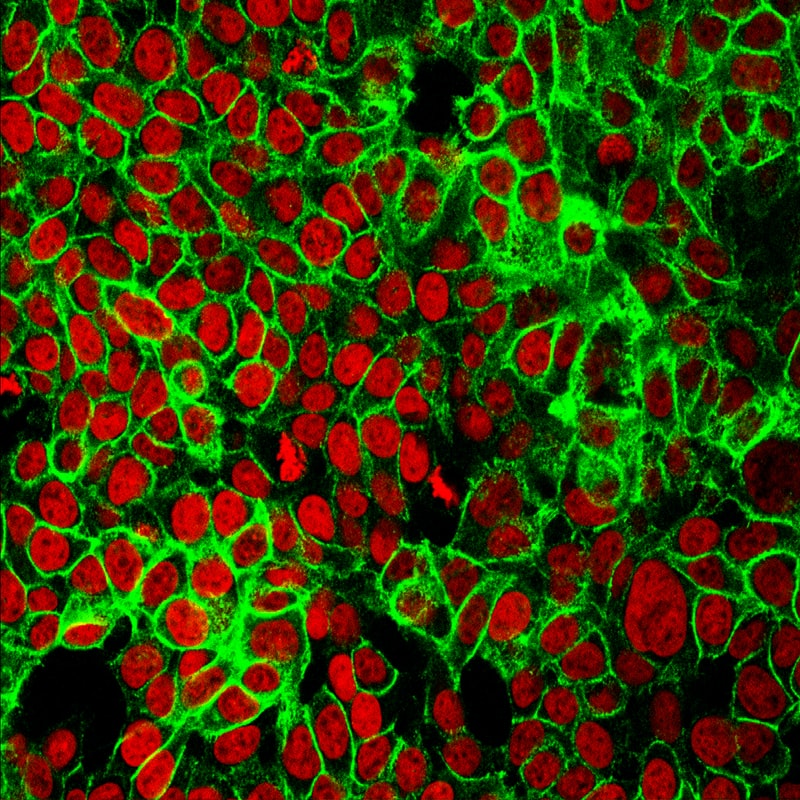
WRITTEN BY: Shreya Mahesh Glioblastoma is one of the most common types of brain cancer. The Glioblastomas are grade 4 brain tumors, which means that they contain the most defective cells, making them the most aggressive. These tumors develop primarily in the frontal and temporal

No Thumbnail

Black Holes Suppress the Growth of Dwarf Galaxies

WRITTEN BY Phyllis ShEn For a long time, black holes have been known to influence the development and growth of objects in the universe, including the formation of stars within galaxies (Somerville and Davé). Galaxies are clusters of stars held together by gravity, and the

No Thumbnail

DARPA Funded Gene Modulation, the New Genetic Medicine?

WRITTEN BY: ASHLEY KOCA The Defense Advanced Research Projects Agency, DARPA, is an organization out of the United States Department of Defense whose primary purpose is to progress the development of military technologies, first inspired and motivated by the Soviet threat “Sputnik.” Within this agency

No Thumbnail

The 2019 Japan Super Science Fair

WRITTEN BY: MARGARET WEI The SIR department at the Illinois Mathematics and Science Academy (IMSA) annually selects a few students to present their research at the Japan Super Science Fair (JSSF). At the Science Fair, these students were given the opportunity to interact and collaborate